Rotate, Don't Replace: The Seasonal Curation Method That Keeps Your Home Feeling New
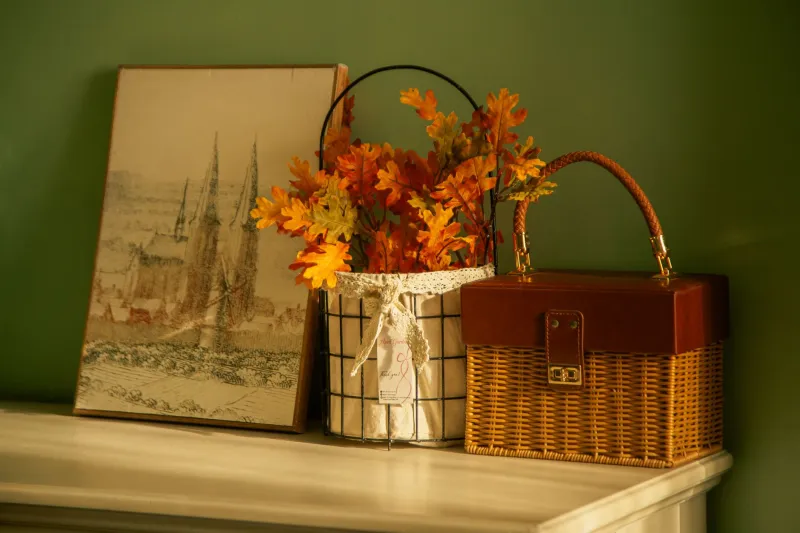
There's a familiar itch that hits around late September. The throw pillows feel tired. The entryway looks like it belongs to a different version of you. So you open a browser tab, scroll through a dozen product pages, and before you know it, a box is on its way to your door.
Sound familiar? You're not alone — and honestly, you're not wrong to want something different. The craving for novelty is completely human. But what if the fix wasn't another purchase? What if the answer was already sitting in a bin in your storage closet?
That's the core idea behind seasonal curation: intentionally rotating the things you own through your living space across the year, rather than piling on new acquisitions every time the mood strikes. It's a surprisingly effective way to keep your home feeling alive, your budget intact, and your space from turning into a storage unit you also happen to sleep in.
Why Novelty Feels So Good (Even When It's Familiar)
Here's a quirk of human psychology worth knowing: our brains respond to perceived newness almost as strongly as actual newness. When something disappears from your environment for three or four months and then comes back, your mind greets it with a little jolt of recognition and pleasure — almost like running into an old friend.
Researchers call this the "mere exposure effect" working in reverse. When we see the same objects constantly, we stop noticing them. They become visual noise. But pull that chunky knit blanket out of a bin in October after not seeing it since March? Suddenly it feels like a treasure you forgot you had.
Seasonal rotation exploits this reset in a really satisfying way. You're not buying new — you're just reintroducing the old. And your brain, for the most part, doesn't know the difference.
The Practical Mechanics: How to Actually Do This
Okay, so the concept sounds appealing. But "rotating your stuff by season" can feel vague when you're staring at a living room that already feels like controlled chaos. Here's a framework that actually works.
Start with four loose categories: Think spring/summer and fall/winter as your two main seasonal halves, with transitional micro-swaps in between. You don't need to overthink it into twelve micro-seasons.
Identify your "active" items: These are the things currently out and in use. Textiles, decorative objects, kitchen items, even certain clothing accessories. Look around your space and flag anything that feels specifically tied to a season or mood.
Box and label the off-season stuff: Invest in a few good storage bins — clear ones with lids work great — and label them honestly. "Fall/Winter Living Room" is more useful than "Miscellaneous Decor Box 3."
Schedule your rotations: Tie them to something you already do. A lot of people find that the transition weekends — think Labor Day, Memorial Day — are natural prompts to do a seasonal swap. Put a reminder in your phone. Make it a ritual, not a chore.
Edit as you go: Each time you pull something out of storage, ask whether it still earns its place. If you open the bin and feel nothing, that's information. Donate it, pass it along, or sell it. Seasonal rotation is also a slow, low-pressure way to declutter without the overwhelm of a full purge.
What to Rotate (And What to Leave Alone)
Not everything in your home needs to be on a rotation schedule. Some things — your sofa, your dining table, the art you genuinely love year-round — are anchors. Let them be.
The best candidates for seasonal cycling tend to be:
- Textiles: Throw blankets, accent pillows, lightweight curtains versus heavier drapes, table runners
- Candles and scents: Nothing says "season change" like swapping a citrus candle for something warm and woodsy
- Small decorative objects: Vases, trays, bowls, figurines — the stuff that lives on shelves and surfaces
- Kitchen and dining accents: Seasonal dish towels, placemats, even certain serving pieces
- Entryway and bathroom accessories: These small spaces respond dramatically to even minor swaps
You'd be surprised how much a living room can shift just by swapping the textiles and the scent. It's a genuinely different sensory experience for maybe 45 minutes of effort.
The Financial Case Is Pretty Compelling
Let's talk money for a second, because this is where seasonal curation quietly becomes one of the smarter shopping strategies around.
The average American household spends somewhere in the neighborhood of $650 a year on home décor — and a significant chunk of that is impulse-driven. We buy because we're bored with our space, not because we actually need anything new.
If you're rotating what you already own, that itch gets scratched without opening your wallet. And when you do choose to add something new to your rotation, you can make that decision deliberately — picking something genuinely great rather than whatever caught your eye on a Tuesday afternoon.
There's also the quality-over-quantity angle. When you're not replacing things constantly, you can afford to invest more in the pieces you do buy. A really beautiful wool throw that you bring out every October for four or five years is a far better value than three cheaper ones you bought on a whim and eventually donated.
Making It Feel Like a Ritual, Not a Chore
The people who stick with seasonal rotation long-term tend to treat it as something they look forward to, not something they have to do. A few things help with that mindset shift.
Put on a good playlist or a podcast you've been saving. Make a cup of coffee. Give yourself a couple of hours rather than trying to rush through it. Think of it less like reorganizing and more like redesigning — because that's genuinely what you're doing.
Some folks even keep a simple list or a few phone photos of how their space looked last time a particular season rolled around. It gives you a starting point and helps you notice how your taste has shifted over time.
And here's the thing: when you pull out that bin in October and rediscover a candle you forgot you loved, or a set of linen napkins that are somehow even more beautiful than you remembered — that's a real moment of satisfaction. No shipping confirmation required.
The Bigger Picture
Seasonal curation isn't about deprivation or living like a minimalist monk. It's about being intentional with what you bring into your space and how long it stays visible. It's about understanding that novelty doesn't have to cost anything, and that the best version of your home might already exist — just waiting in a labeled bin in the hall closet.
At Ambiya, we think about curation as a practice, not a purchase. The goal is always a home that feels considered, alive, and genuinely yours — whatever the season.