Dress Better by Owning Less: The Surprising Power of a Curated Closet

Here's a question worth sitting with: When was the last time you stood in front of a closet stuffed with clothes and thought, I have nothing to wear?
If that sounds painfully familiar, you're not alone. A lot of us have been operating under the assumption that more clothes equals more options equals better style. But the reality? It usually just equals more chaos. The closets that actually produce great outfits tend to be smaller, more deliberate, and filled with pieces that genuinely work together.
That's the idea behind what we're calling the curated wardrobe — and once you experience it, it's hard to go back.
The Mental Drain You Don't See Coming
Decision fatigue is real, and your closet is one of its sneakiest sources. Every morning, when you're digging through a pile of tops you never quite loved or pants that almost fit right, your brain is burning through energy before your day has even started.
Research in behavioral psychology consistently shows that the more choices we face, the harder it becomes to make a good one. And when the stakes feel low — like picking an outfit — we tend to default to whatever's easiest, not whatever's best. That's how you end up wearing the same three things on rotation while ignoring the other sixty items hanging behind them.
A smaller, more thoughtful wardrobe short-circuits this cycle. When every piece earns its spot, getting dressed stops feeling like a chore and starts feeling almost automatic — in the best possible way.
Why Fewer Pieces Actually Look Better
There's a certain polish that comes with intentional dressing, and it's not about spending more money. It's about coherence. When the pieces in your closet are chosen with care — when they share a color palette, complement your body, and suit the life you actually live — they start working together instead of competing for attention.
Styling professionals call this a capsule wardrobe, and the concept has been around for decades for good reason. The idea is simple: a core collection of versatile, well-fitting pieces that can be mixed and matched across a wide range of occasions. Think quality over quantity. Think does this actually flatter me over was this a good deal.
The result isn't a boring, uniform look. It's a consistent, elevated one. People who dress this way tend to look more put-together — not because they're trying harder, but because the foundation they're working from is stronger.
Building Your Own Curated Wardrobe: Where to Start
The good news is that you don't need to torch everything and start over. A curated wardrobe is built gradually, with intention. Here's a practical framework to get moving:
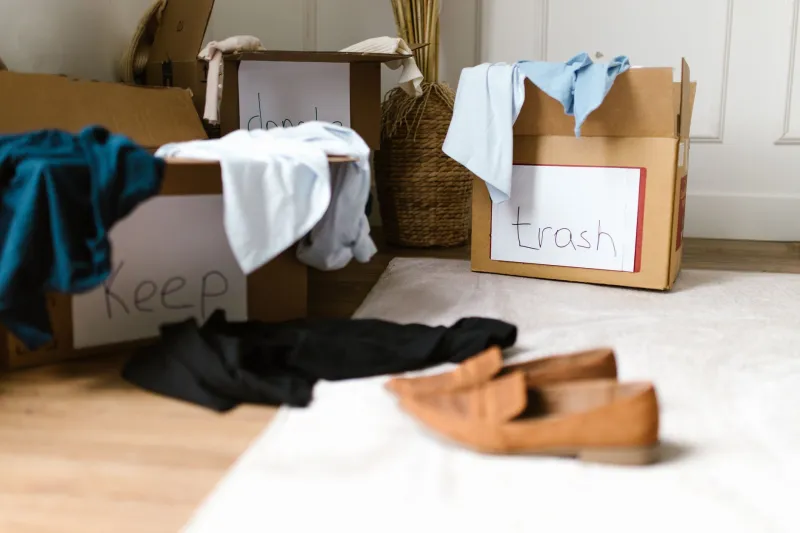
Start with an honest audit. Pull everything out and ask yourself three questions about each item: Does it fit well right now? Do I actually wear it? Does it make me feel good? If the answer to any of those is no, it's a candidate to go. No guilt required.
Identify your real lifestyle. This one trips people up constantly. We buy clothes for the life we wish we had — the brunch dates, the gallery openings, the spontaneous weekend trips — and end up with a wardrobe that doesn't match Monday through Friday. Be honest about how you actually spend your time and dress for that reality.
Choose a neutral backbone. A curated wardrobe usually anchors around a few neutral tones — navy, white, black, camel, grey — that make it easy to mix pieces without clashing. You can absolutely add color and personality from there, but the neutrals are what make everything combinable.
Invest where it counts. Not every piece needs to be expensive, but certain items are worth spending more on. Outerwear, denim, and a good blazer or structured jacket tend to be the workhorses of most wardrobes. Quality in these areas pays off visibly and lasts significantly longer.
Think in outfits, not pieces. Before you add anything new, ask yourself: What does this go with? If you can't name at least three things already in your closet, it might not be the right addition — yet.
The Confidence Factor Nobody Talks About
Here's the part that surprises most people: a curated closet doesn't just make you look better. It makes you feel better — and that difference shows up in your posture, your presence, and how you carry yourself through the day.
When you're not second-guessing your outfit or tugging at something that doesn't quite fit, you free up mental bandwidth for everything else. There's a quiet confidence that comes from knowing you look good — not because you spent a fortune, but because you made thoughtful choices.
Psychologists have a term for this: enclothed cognition. The idea is that what we wear influences how we think and behave. Clothes that fit well and feel intentional tend to put us in a more confident, capable headspace. It's a feedback loop — dress with intention, feel more intentional, show up better.
Maintaining the Edit
Once you've pared things down, the goal is to keep the wardrobe from creeping back toward chaos. A few habits that help:
- Shop with a list. Before you buy anything new, know what gap you're actually filling.
- Follow a one-in, one-out spirit. Not rigidly, but consciously. When something new comes in, consider what's no longer earning its place.
- Do a seasonal reset. Twice a year — spring and fall — pull things out and reassess. Styles change, bodies change, lifestyles change. Your wardrobe should reflect where you are now.
- Give yourself permission to let go. Sentimental attachment to clothes is real, but a piece that's been sitting unworn for two years isn't serving you — or anyone else.
The Bigger Picture
At Ambiya Store, we think a lot about what it means to live with things you actually love — not just things you accumulated. Your wardrobe is one of the most personal expressions of that idea. It's the first thing you put on every morning and the last thing you take off at night.
A curated closet isn't about minimalism for its own sake. It's about making room for what genuinely works — and letting go of everything that doesn't. When you do that, something shifts. Getting dressed becomes easier. You look more consistent. And you feel, quietly but noticeably, more like yourself.
That's not a small thing. That's the whole point.