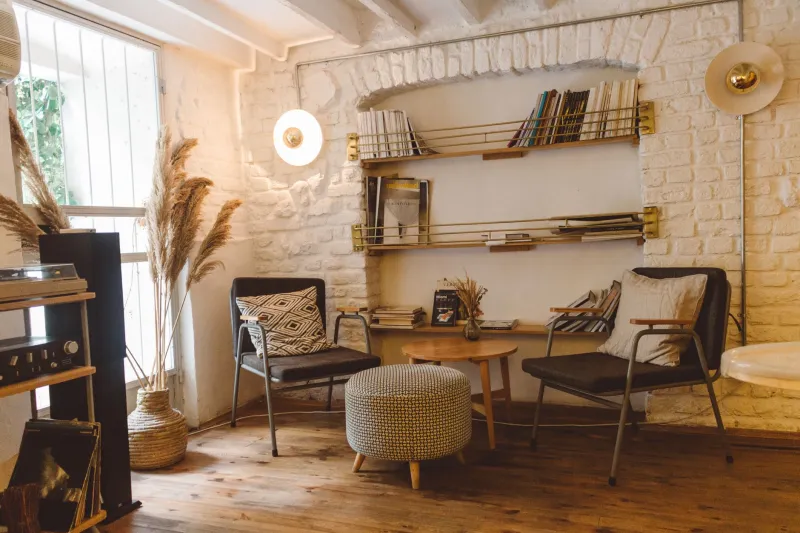
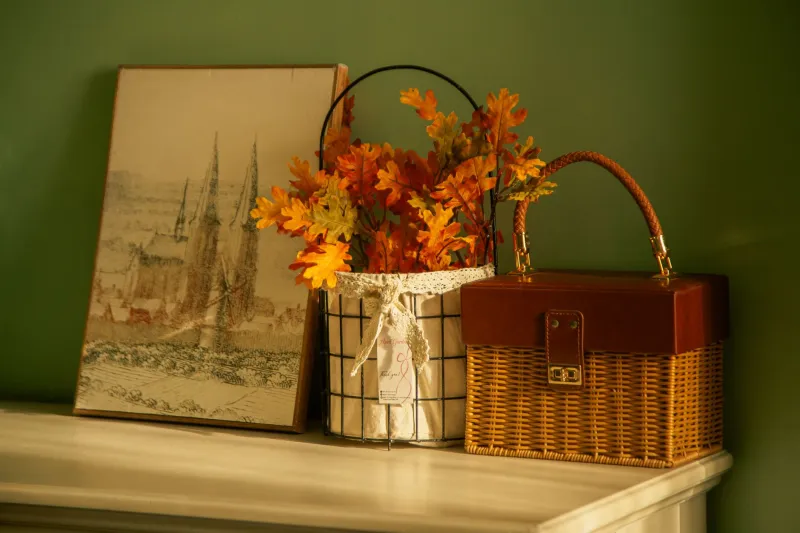
Your Space Looks Perfect — So Why Does It Feel Like a Hotel Room?

There's a specific kind of disappointment that hits when you step back and look at a room you've worked really hard on — and feel nothing. The throw pillows are right. The gallery wall is balanced. The plant is thriving. Everything looks like it belongs in a roundup of cozy living rooms. And yet.
It doesn't feel like yours.
This is what we're calling the authenticity gap — the strange distance between a space that looks great and a space that actually feels like home. And if you've been following aesthetic trends closely, there's a decent chance you've fallen into it without even realizing.
The Problem With Curating for an Audience
Somewhere along the way, the word "curated" picked up a second meaning. It used to mean thoughtfully selected. Now it often means optimized for approval — a subtle but significant shift.
When you're designing a space with an imaginary audience in mind (Instagram, guests, even just the version of yourself you wish you were), you start filtering out anything that doesn't fit the aesthetic. The weird little ceramic owl your grandma gave you. The mismatched bookshelf you've had since college. The stack of novels you're actually reading, which have zero visual cohesion.
Those things get quietly removed. And with them goes something harder to name — the texture of your actual life.
Design accounts and shopping guides — including the ones we love — are built around ideals. They show you a version of a space that's been staged, lit, and photographed. Nobody lives in those rooms. They're meant to inspire, not to replicate. But the line between inspiration and imitation can get blurry fast, especially when you're surrounded by the same aesthetic across every platform you scroll.
Sterile Is a Design Outcome, Not Just a Feeling
Here's something worth sitting with: sterility in a home isn't an accident. It's a result. It happens when curation becomes subtraction — when you keep removing things until what's left is technically correct but emotionally empty.
Interior designers who work on spaces people actually live in (not just photograph) talk about this all the time. The rooms that feel the best to be inside usually have some tension in them. A rough texture next to something smooth. An old piece next to something new. A personal object that breaks the visual rule but earns its place because it means something.
The imperfections aren't flaws in the design. They're often the whole point.
What 'Curating for Living' Actually Looks Like
Curating for living starts with a different question. Instead of asking "does this look right?" you ask "does this feel right?" It sounds simple, but it requires a kind of honesty that's easy to skip when you're shopping with a mood board in your head.
A few things that tend to make the difference:
Objects with stories beat objects with aesthetics. That beat-up leather chair you rescued from a sidewalk sale? It has more energy in it than a perfect accent chair from a catalog. Not because it's prettier — it isn't — but because it carries something. History, luck, a good memory. That stuff is felt, even if it can't be explained.
Layering beats matching. Rooms that feel lived-in tend to have layers — things that were added at different times, in different moods, for different reasons. A collected space has depth. A matched space can feel flat, no matter how beautiful the individual pieces are.
Permission to keep the weird stuff. You probably have at least one thing in your home that doesn't fit any aesthetic but that you genuinely love. Keep it. Put it somewhere you'll see it. That object is doing more work for the feeling of your home than you're giving it credit for.
The Instagram Test (and Why to Stop Taking It)
Here's a quick mental exercise: look around your space and ask yourself which things you'd move or hide before taking a photo. Whatever those things are — that's often where the soul of your home lives.
The pile of books on the coffee table. The kids' drawings stuck to the fridge with mismatched magnets. The collection of mugs that has no visual logic but represents every trip you've taken in the last decade. These aren't the things you'd feature. They're the things that make the space feel like you.
Curation, done well, isn't about creating a space that photographs beautifully. It's about creating a space that supports your actual life — the messy, specific, completely un-stageable version of it.
Finding Your Own Aesthetic (Not Someone Else's)
One of the most useful things you can do if your space feels off is to stop looking at other people's spaces for a while. Give yourself a break from the Pinterest boards and the design accounts. Then walk through your own home and notice what you actually stop to look at. What makes you feel something. What you reach for. What you ignore.
Your instincts about your own space are more reliable than any trend. They just get drowned out when you're constantly comparing.
At Ambiya Store, we think about curation as something that should serve you — not the other way around. The best version of your home is one you could never have found by following a formula, because it's built from the specific, irreplaceable details of who you are and how you live.
That's not something any algorithm can curate for you. And that's exactly what makes it worth getting right.