Living with Intention: A Practical Guide to Building a Home That Actually Means Something
Walk into any big-box store on a Saturday afternoon and you'll see it happening in real time — carts piling up with things that seemed like a good idea under fluorescent lighting, products grabbed on impulse because they were on sale or just... there. Most of us have been guilty of it. And most of us have also stood in our own homes at some point, looked around at the accumulated stuff, and wondered how it all got here.
The answer, honestly, is that we weren't really choosing. We were just acquiring.
There's a difference — and it matters more than you might think.
What "Curated Living" Actually Means (It's Not What Instagram Sold You)
The word "curated" gets thrown around a lot these days, usually in contexts that have more to do with aesthetics than substance. But genuine curation isn't about having a perfectly coordinated color palette or owning the trendiest pieces. It's about making deliberate decisions — asking real questions before something crosses your threshold.
A curated home isn't necessarily a sparse one or an expensive one. It can be full and cozy and layered. The defining characteristic is that nearly everything in it was chosen, not just collected. Each item has a reason for being there that goes beyond "it was available."
At Ambiya Store, this philosophy sits at the heart of how we think about the products we carry. The goal has never been to offer everything — it's been to offer the right things for people who are paying attention to what they bring into their lives.
The Four Questions Worth Asking Before You Buy
Building a more intentional home doesn't require a complete overhaul or a significant budget. It starts with slowing down the decision-making process just enough to ask a few honest questions.
1. Does it solve a real problem, or just an imaginary one?
Marketing is exceptionally good at creating needs that didn't previously exist. Before you buy something, try to identify the specific, concrete problem it addresses. "I've been struggling to find a good way to store my spices" is a real problem. "This looks like the kind of thing a person with their life together would own" is not.
2. Does it fit the life you have, or the life you think you should have?
This one stings a little, but it's worth sitting with. A lot of us buy products for aspirational versions of ourselves — the person who cooks elaborate meals from scratch, the person who works out every morning, the person who hosts dinner parties. If a product only makes sense for a version of you that doesn't quite exist yet, it's worth waiting until it does.
3. Will it age well — in quality and in style?
Some things are worth buying for a season. A lot of things, though, are worth buying for a decade. Ask yourself whether the item is built to last and whether you'll still want it around in five years. Trend-driven purchases have a way of feeling dated fast, and cheap construction has a way of making itself known even faster.
4. Does it align with something you actually care about?
This is the values piece — and it's the one most people skip. Maybe you care about sustainability, so you try to avoid single-use plastics. Maybe you care about supporting small-batch makers. Maybe you care about keeping your home calm and uncluttered. Whatever your values are, your purchasing decisions are either reinforcing them or quietly undermining them. It's worth knowing which.
Building a Framework, Not a Rule Book
Here's the thing about intentional shopping: it's not supposed to be rigid. Life is messy, budgets are real, and sometimes you just need a cheap spatula because yours melted. The goal isn't perfection — it's awareness.
A useful starting point is to designate a short waiting period for non-essential purchases. Even 48 hours between "I want this" and "I'm buying this" can dramatically change your decision-making. A lot of impulse buys lose their appeal quickly. The ones that don't are usually worth it.
It also helps to periodically audit what you already have. This isn't about minimalism for its own sake — it's about understanding your patterns. When you notice that you own four of something and use none of them, that's useful data. It tells you something about a gap between how you think you live and how you actually live.
The Aesthetic That Follows Function
Something interesting happens when you start making more intentional choices: your home starts to look better without you trying very hard. Not because you're following a design trend, but because cohesion naturally emerges when things are chosen rather than accumulated.
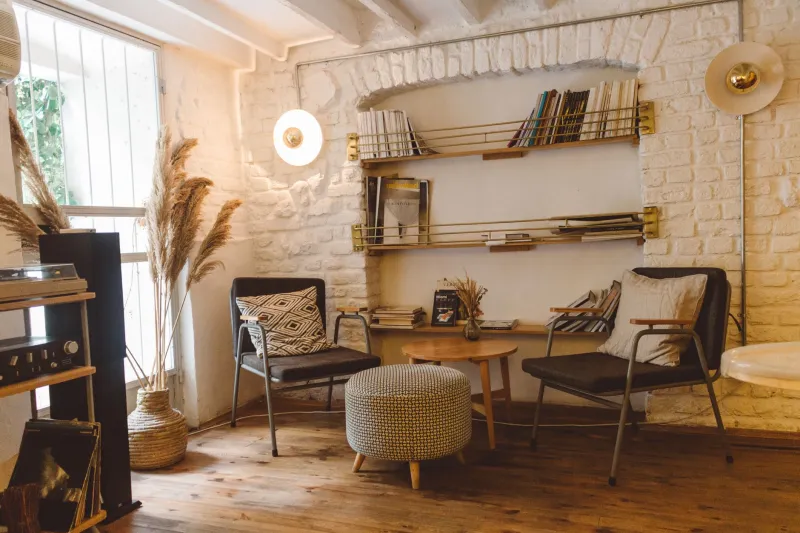
When each item in a room was brought in deliberately, there's a visual and emotional consistency to the space that's hard to manufacture artificially. It's the difference between a home that looks curated and a home that is curated — and people can feel the distinction when they walk in, even if they can't articulate why.
This is the quiet power of intentional living. It's not about showing off. It's about creating an environment that genuinely supports the way you want to feel every day — calm, functional, inspired, comfortable, or some combination of all of the above.
Start Small, Stay Honest
You don't need to overhaul your entire home to start living more intentionally. Pick one room, or even one category of product — kitchenware, storage, lighting — and start applying these questions there. Notice how it changes your relationship with shopping, with your space, and eventually with your sense of what you actually need.
The homes that feel the most personal and the most livable aren't the ones with the biggest budgets or the most square footage. They're the ones where someone paid attention — where every drawer and shelf and surface tells a small, true story about the person who lives there.
That's the kind of home worth building. And it starts with a single, honest question before you hit "add to cart."