Why Buying Less — But Better — Is Actually the Smarter Financial Move
Let's get something out of the way right at the start: this is not an article telling you to spend more money. That's not the argument here.
The argument is almost the opposite — that the way most of us shop, chasing the lowest upfront price and replacing things constantly, is quietly one of the more expensive habits we have. And that a different approach, one built around buying fewer things but choosing them more carefully, can actually be kinder to your budget in the long run.
It sounds counterintuitive. It's worth unpacking.
The Hidden Cost of Cheap
Here's a real scenario that plays out in millions of American households: you need a new blender. You find one for $25 at a discount retailer, it works fine for about a year, then the motor starts struggling, the lid cracks, and eventually it ends up in a landfill. You buy another one. Same story, slightly different timeline. Over ten years, you've spent $250 on blenders and thrown away four of them.
Alternatively, you spend $120 on a blender that's built to last, comes with a warranty, and is still running strong a decade later. The math isn't complicated.
This is what's sometimes called the "cost per use" framework, and it reframes the entire concept of value. The question isn't "how much does this cost?" — it's "how much does this cost per time I use it, over its actual lifespan?" When you calculate it that way, cheap stuff is frequently the most expensive option.
Decision Fatigue Is a Real (and Underrated) Budget Drain
There's another cost that doesn't show up on any receipt: the cognitive and emotional toll of constantly making purchasing decisions.
When you own things that work well and last, you stop thinking about replacing them. When you own things that are perpetually breaking, wearing out, or disappointing you, you're in a constant low-level cycle of researching, comparing, ordering, returning, and re-purchasing. That takes time, energy, and — eventually — more money.
Decision fatigue is a well-documented psychological phenomenon. The more choices we make, the worse we get at making them. Paradoxically, owning more things often means making more purchasing decisions, not fewer — because cheap things keep needing to be replaced.
Buying intentionally breaks that cycle. When you choose something carefully and it delivers on its promise, you get to stop thinking about it. That's not a small thing.
"Quality Products Are for Rich People" — Let's Challenge That
This is the assumption that keeps a lot of people locked into the replacement cycle, and it deserves a direct response.
Yes, some well-made products carry a higher upfront price. Not all of them do — plenty of durable, thoughtfully designed items are priced accessibly, especially as more brands have realized that quality and affordability don't have to be mutually exclusive. But even when there is a price gap, the framing of "I can't afford quality" often doesn't hold up to scrutiny.
If you're spending $30 every year on the same category of product, you can afford $90 once for something that lasts three times as long — and that's a conservative estimate. The challenge is psychological, not financial: spending more in a single transaction feels like a bigger risk, even when the math clearly favors it.
This is one place where intentional shopping requires a small but meaningful mental shift. You're not spending more. You're spending differently — concentrating your investment rather than spreading it thin across a string of mediocre purchases.
The Environmental Argument Is Also a Financial One
Waste costs money. Not always in obvious ways, but in ways that accumulate.
When you throw something away — a kitchen gadget, a piece of furniture, a clothing item — you've essentially made a donation to a landfill. All the money you spent on that item is gone, and you're starting from zero again. Do that enough times across enough categories, and it adds up to a staggering amount of money that bought you nothing lasting.
Sustainability-minded shopping and budget-conscious shopping turn out to have a lot in common. Both are skeptical of disposability. Both prioritize lasting value over immediate gratification. Both push back against the idea that more is better.
At Ambiya Store, this is part of why we focus on products that are built to stick around — not just because it's better for the planet (though it is), but because it's genuinely better for the people buying them.
A Practical Starting Point
You don't need to overhaul your entire approach to shopping overnight. Start with one category where you know you're caught in a replacement loop — maybe it's kitchen tools, maybe it's phone accessories, maybe it's bedding or cleaning supplies.
Do a quick audit: how much have you spent in that category over the past three years? How many of those purchases are still serving you? The answers are usually illuminating.
Then, the next time you need to replace something in that category, resist the pull of the lowest price. Give yourself a budget ceiling that's maybe 30-50% higher than what you'd normally spend, and look for something that has genuine staying power — good reviews over time, solid construction, a real warranty, and a track record of lasting.
See how it feels a year later.
The Bigger Picture
There's a version of minimalism that's genuinely aspirational in a way that feels out of reach — the perfectly spare apartment, the capsule wardrobe, the aesthetic that requires either enormous wealth or enormous sacrifice. That's not what we're talking about here.
This is simpler and more practical: just buying things that earn their place, and not buying things that don't. It's about being a more thoughtful consumer, not a more austere one.
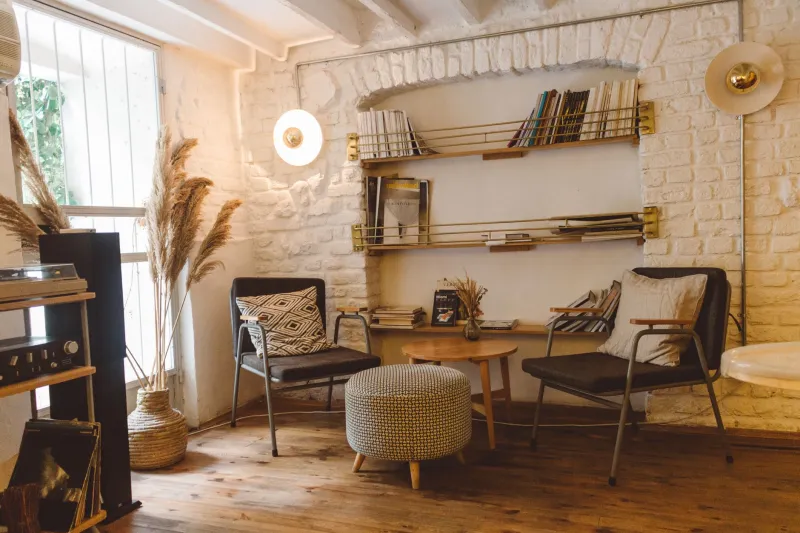
The irony is that people who live this way often end up with homes that feel richer — more considered, more personal, more functional — than homes stuffed with cheap stuff that never quite worked right.
Fewer things. Better things. Less money spent over time. More satisfaction with what you have.
That's not a luxury philosophy. That's just good math.