The Invisible Tax You're Paying Every Time You Buy 'Fine'
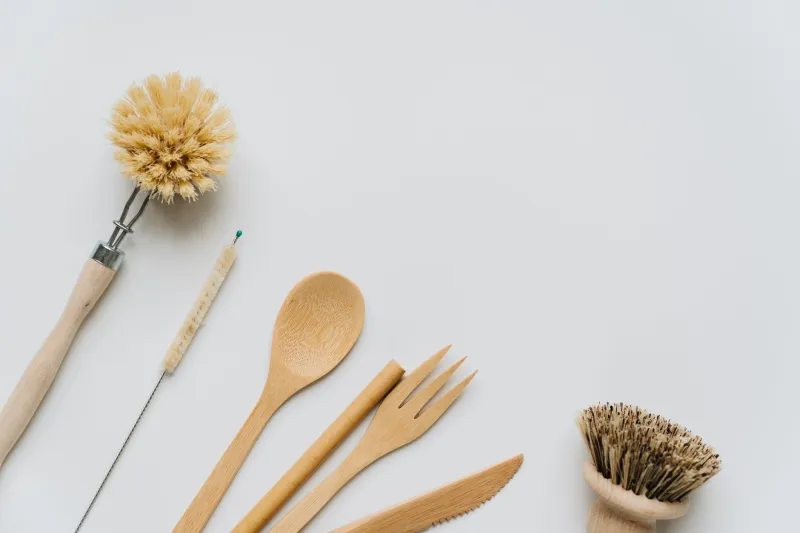
Let's talk about the spatula.
You know the one. It's technically functional. It flips a pancake. It hasn't melted completely. But every single time you reach for it, there's a barely perceptible flicker of irritation — a micro-moment where your brain registers this isn't quite right before you push past it and get on with breakfast.
Multiply that by every object in your home that operates in the same zone: not broken, not great, just... fine. The sheets that feel okay. The coffee maker that works but is annoying to clean. The desk chair that's not really comfortable but you've gotten used to it.
Individually, none of these things seem like a problem. Together? They're running a quiet tax on your daily life that most people never stop to calculate.
What Decision Fatigue Actually Costs
By now, most of us have heard the term decision fatigue — the idea that making lots of small decisions erodes our mental energy over time. What's less discussed is the role that low-grade product frustration plays in amplifying it.
When something doesn't work the way it should, your brain doesn't just note it and move on cleanly. It registers a small friction, makes a micro-adjustment, files a tiny complaint. Do that dozens of times a day — every time you wrestle with a sticky drawer, use a knife that doesn't cut cleanly, or sit in a chair that never quite supports your back — and you've spent real cognitive energy on nothing productive.
Dr. Leah Winters, a consumer psychologist based in Chicago, explains it this way: "We tend to think of frustration as something that happens in big moments. But chronic low-grade friction from our environment is actually more depleting because it's constant and invisible. You never get a chance to recover from it."
In other words, that spatula is costing you more than the $4 you saved by not buying the better one.
The 'Fine' Trap
So why do we keep buying things that are just fine? A few reasons, actually.
First, price sensitivity. The better version costs more, and in the moment of purchase, the gap feels unjustifiable. It's just a spatula. It's just a pillow. We downplay the frequency of use and the cumulative impact because we're focused on the transaction, not the long game.
Second, we underestimate how much we'll notice. Research in behavioral economics consistently shows that people are bad at predicting hedonic adaptation — how quickly we stop noticing good things and start noticing bad ones. That slightly-off pillow that seemed fine in the store becomes the thing your neck complains about every morning within a week.
Third, and maybe most importantly, there's a cultural script that says caring too much about everyday objects is shallow. That it's vain or consumerist to want your kitchen tools to be genuinely good, or your bedding to actually feel luxurious. So we talk ourselves out of investing in the things we use the most.
That script, honestly, is costing a lot of people a lot of daily quality of life.
What 'Genuinely Good' Actually Feels Like
There's a specific experience that happens when you replace a 'fine' item with something that's genuinely right for you. It's hard to describe without sounding dramatic, but people try.
Kira, a project manager in Seattle, replaced a $20 desk lamp she'd had for four years with one she'd been eyeing for months. "I kept talking myself out of it because it felt frivolous. Then I finally bought it and I sat down at my desk that first evening and just... felt better. Like, immediately. I stayed at my desk longer. I got more done. I didn't realize how much I'd been dreading sitting there."
James, a dad of three in Nashville, swapped out a mediocre set of kitchen knives for a single quality chef's knife. "Cooking stopped being a chore I resented and started being something I actually looked forward to. Same kitchen. Same recipes. Different knife."
These aren't luxury transformations. These are quality-of-life adjustments accessible to most people — if they stop spreading their budget across a dozen 'fine' things and redirect it toward fewer, better ones.
The Math of Fewer, Better
Here's the reframe that changes everything: fewer, better is almost always the smarter financial move, not just the more satisfying one.
If you buy a $15 item three times over four years because it keeps disappointing you and needs replacing, you've spent $45 and accumulated four years of low-grade frustration. If you'd spent $40 upfront on the version that actually worked, you'd have paid less, owned less, and felt better the whole time.
This math applies across categories — from kitchen tools to bedding to luggage to everyday clothing. The cheap option that requires frequent replacement or that generates daily friction is rarely the budget-friendly choice it appears to be.
At Ambiya, this is a core part of how products get selected for the store. The question isn't just whether something works — it's whether it genuinely delivers. Whether it's the kind of thing someone will use every day and feel good about every time.
A Practical Starting Point
If you want to start identifying where 'fine' is costing you, try this: for one week, notice every micro-moment of friction in your daily routine. The thing you reach for and slightly dread. The item you use and feel vaguely annoyed by. The object that just barely does its job.
Then rank them by frequency of use. The things you interact with most — daily-use kitchen items, your desk setup, your sleep environment — are where 'good enough' extracts the highest ongoing toll. Those are your upgrade priorities.
You don't need to overhaul everything at once. In fact, you shouldn't. But starting to notice the invisible tax you're paying is the first step toward stopping it.
Fine isn't free. It just feels that way at checkout.